Author Archives: Kevin Bryant

England’s futsal team are on their best ever run and Doug Reed and Agon Rexha speak to UEFA.com about this week’s preliminary round and the game’s growth.

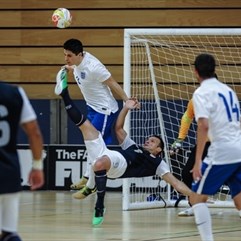
England action courtesy UEFA.com

England action courtesy UEFA.com

They played 12 matches last year, winning eight (from an all-time tally of 30 victories) and drawing two. Indeed, they are on a run of five straight wins, two more than they have previously achieved, and those last four came via double-header defeats of Latvia – with both games St George’s Park sell-outs – and Andorra. England meet both sides again this week when they travel to Malta for UEFA Futsal EURO 2016 preliminary round Group E.

Click here to read full interview

The England Futsal squad arrived at St George’s Park over the weekend to start their final training camp before this week’s Euro Qualifiers. Pete Sturgess’ squad fly out to Malta on Tuesday for the Preliminary Round of the UEFA Futsal Euros, and the head coach and his staff want to ensure that the squad are in the best possible condition, physically and mentally, to tackle the challenges that lie ahead in Malta.

UEFA Futsal Euros Preliminary Qualifying Round  Andorra, England, Latvia, Malta  14-17 January 2015 Malta

UEFA Futsal Euros Preliminary Qualifying Round Andorra, England, Latvia, Malta 14-17 January 2015 Malta


And whilst the Three Lions will be buoyed by their increasing success over the past few years on the international Futsal scene, the squad are aware that qualification to the Main Round of the Euros next week is anything but assured.
England may have climbed 23 places in the World Futsal Rankings during 2014, the biggest rise of any nation, but they still lie seven places behind Latvia, arguably their main rivals for superiority in Group E in Malta.
As well as Latvia, England will also face Andorra and Malta, with only the top team guaranteed to progress to the next round.

Read more at http://www.thefa.com/news/england/development/2015/jan/england-futsal-set-for-euros-120115#AIMEJqRWbDv4Lscb.99

What should futsal players be eating? New schools menu is good a guide as you will get.

480483_162597387211960_1596709452_nSchools have been coming to terms with the new rules for healthy school dinners; the new rules were introduced at the beginning of the new term.

The new rules are compulsory for local authority schools and both new free schools and schools that convert to academy status.

New rules include:

  • one or more portions of vegetables or salad as an accompaniment every day
  • at least three different fruits and three different vegetables each week
  • an emphasis on wholegrain foods in place of refined carbohydrates
  • an emphasis on making water the drink of choice
  • limiting fruit juice portions to quarter pints (150ml)
  • restricting the amount of added sugars or honey in other drinks to 5%
  • no more than two portions a week of food that has been deep-fried, batter-coated or breadcrumb-coated
  • no more than two portions of food that include pastry each week
  • a portion of milk (lower fat and lactose reduced) to be made available once a day

The new rules were implemented after the founders Leon food chain John Vincent and Henry Dimbleby examine nutrition in schools in England. These new rules replace the rules introduced by celebrity chef, Jamie Oliver.

Head of Nutrition at the Children’s Food Trust, Dr Patricia Mucavele said: “We tested the new standards with the people who would be using them – school caterers and cooks. They told us the new standards were easier and more intuitive to use to plan interesting and creative menus, which has got to be great news for children and school food.”

Oldham football coach says to make a British Pele we must mirror futsal’s life skills

BORN WINNERS: England are desperately seeking a return to the glory days of the 1966 World Cup victory by nurturing future generations

BORN WINNERS: England are desperately seeking a return to the glory days of the 1966 World Cup victory by nurturing future generations

The League One club has stepped up to take on the challenge of planting the seeds of hope for England’s next crop of talent.

All this against a backdrop of racial allegations and evidence of corruption within football’s governing bodies. You won’t get far in our national sport without uncovering some foul play off the pitch.

So Oldham have built the North West’s first outdoor futsal centre. With it will surely come fresh initiatives to encourage team spirit among children.

MM went off the beaten track to find out what kind of impact it might have on the beautiful game…

Admiring glances are something typically associated with everyday life and they come in many forms. From catching sight of a Michael Kors watch worn with pride by the new office intern to the latest wardrobe extravagantly displayed at a film premiere, being envious is an inescapable part of being human.

You would further be forgiven for desperately checking how much holiday allowance you have left. Traipsing the cobbled streets of Greater Manchester while on your way to and from work, on a grim winter evening these thoughts are never very far away.

Alas, Costa Del Cheadle doesn’t quite encapsulate feelings of sun kissed squares in the Mediterranean for the majority of us struggling to making ends meet.

Turning the clocks back to last May, England’s footballing youngsters beat Holland in the U-17 European football championship.

A rare, but tantalisingly rewarding final, it would be fair to say that on this occasion those glances were drawn to our young men.

Incredibly, it was also completed via means of a penalty shootout, yes a penalty shootout! Oh how U21 coach Gareth Southgate will have smiled.

Moving back to present time, when it comes to consistently bringing through exciting, home-grown talent that can play in major tournaments however, the jury is still very much out.

Aspirations of mirroring foreign countries in consistently turning over enviable talent is something high on FA boss Greg Dyke’s wish list.

Is this really achievable though?

According to Neil Lucas, head of recruitment at Sala Soccer Schools, Oldham and Greater Manchester can be the starting point for keeping those eyes locked on football’s homeland.

Sala Soccer currently coach over 250 children a week in weekly classes, as well as working in seven primary schools and six nurseries, coaching futsal to 1100 school children in Oldham and Tameside.

“Two years ago I went to watch how Barcelona play from a young age,” Lucas told MM.

“They have incorporated a game known as futsal, which we teach at our schools. They decide when their players get older, when to stop playing futsal, and when to start playing football as we know it. However the FA will tell you differently.”

Now 43, Lucas has been coaching for over five years and has seen how South American flair, associated with the romance of academies such as Barcelona’s La Masia, has become the desirable blueprint for success.

“I use the techniques I saw as a tool to help children get better at football here in Oldham,” he added.

“We’re not building skyscrapers, we’re building bungalows, but we want to be a part of those fundamental foundations.

“You need to be taught life skills as much as how to pass a football.”

England’s senior side have not won a major competition since Sir Geoff Hurst’s winning goal against West Germany almost fifty years ago. That’s five footballing generations.

Then followed that piece of commentating gold: “They think it’s all over, it is now!” This is today viewed with incredulous irony, as, for many, England’s brief flirtation with global praise came and went with the spirit of 66’.

Not even Paul Gascoigne’s tears in Rome, some 24 years later at Italia 90’, could kick-start a reverse in fortune for a nation still in thrall at the seemingly unattainable prospect of success at a major tournament.

Now in 2015 the game changer for many is the argument that football is now too much of a business.

‘Buy now, pay next year’ deals weren’t just limited to furniture advertisements over Christmas, they’re an everyday part of the makeup of our clubs.

Growing resources are stretched to compete with the distorting effects of oligarchs and billionaires while costs spiral out of the realms of sanity.

In September last year Manchester United’s former head of development, Eric Harrison, claimed the club had sold its soul.

No wonder, with an unquantifiable amount of money spent since that famous youth cup winning side of 1992 where Paul Scholes, David Beckham, Ryan Giggs and the Neville brothers, to name just five, burst onto the scene.

08 Jan 2015 – 06:07AM | By Jonathan Maley – MM exclusive

Click here to read more

How Constraints Make You Better: Why the Right Limitations Can Boost Performance

uruguayIn 1930, a 23-year-old teacher in Uruguay named Juan Carlos Ceriani created a new sport. Ceriani wanted to design a game that was similar to soccer, but that his students could play indoors throughout the year. His new game became known as futsal.

Futsal is very similar to soccer, but it has a few important differences. First, it is played in a much smaller area. (Ceriani designed the game so that it could be played on YMCA basketball courts.) Second, the ball is smaller and has less bounce than a regular soccer ball. Third, there are only five players per side rather than the typical 11 players per side in a soccer match.

This combination of factors — a tighter playing environment and a less-bouncy ball — requires futsal players to develop more creative ball skills because they are constantly playing in crowded spaces. Additionally, because there are fewer players, each person touches the ball much more than they would in a standard soccer match. In fact, according to research quoted by Daniel Coyle in his book The Talent Code, futsalplayers get 600 percent more touches during a typical game than soccer players do. [1]

Throughout the 1930s and into the 1940s,futsal migrated from Uruguay to Brazil, where the Brazilians fell in love with the new game. (Even today, over 75 years later, more people play futsal in Brazil than soccer.) It’s hard to say why futsal became so popular in Brazil, but one thing is for sure: The young Brazilians who grew up playing futsal throughout the 1940s and 1950s developed incredible ball handling and technical skills.

Eventually, these children grew into adults and made the transition from futsal to soccer. The athletic creativity they developed in those futsal games would help the Brazilians to shine on the world stage. During the 12-year span from 1958 to 1970, there were four World Cup championships. Brazil won three of them. [2]

Constraints Accelerate Skill Development

It is common to complain about the constraints in our lives: too little time, not enough money, too small of a network, barely enough resources. Certainly, some of these constraints do hold us back. However, there is also a positive side. The constraints in our lives often force us to make choices and cultivate talents that would otherwise go undeveloped. Constraints drive creativity and foster skill development.

Just as the constraints of futsal forced Brazilian children to develop creativity and better ball handling skills, constraints can also drive your own skill development. In many ways, reaching the next level of performance is simply a matter of choosing the right constraints.

How to Choose the Right Constraints

From what I can tell, there are three primary steps to follow when using constraints to improve your skills.

  1. Decide what specific skill you want to develop.The more specific the skill, the easier it will be to design a good constraint. For example,futsal didn’t help players develop the skill of being good at soccer. That’s too general. It helped them develop creative ball handling skills, which turned out to be valuable in the game of soccer.

Similarly, you shouldn’t try to develop the skill of being “good at marketing,” for example. It’s too broad. Instead, focus on learning how to write compelling headlines or analyze website data — something specific and tangible.

  1. Design a constraint that requires this specific skill to be used.There are three main options for designing a constraint: time, resources, and environment.
  2. Time:Give yourself less time to accomplish a task or set a schedule that forces you to work on a skill more consistently.
  3. Resources: Give yourself fewer resources (or different resources) to do a task.
  4. Environment: According to one study, if you eat on 10-inch plates rather than 12-inch plates, you’ll consume 22 percent fewer calories over the course of a year. (More on this idea and other nutrition improvements here.) One simple change in environment can lead to significant results. In my opinion, environmental constraints are best because they impact your behavior without you realizing it.
  5. Play the game.Constraints can accelerate skill development, but they aren’t a magic pill. You still need to put in your time. The greatest Brazilian soccer players were still playingfutsal all the time. The best plan is useless without repeated action. What matters most is getting your reps in.

The Idea in Practice

I am currently experimenting with different constraints to boost my skills in certain areas. Here are a few skills I have been working to develop and the constraints I am placing on myself to make them happen:

Writing skills. I want to be a better writer, so I set a schedule where I have to publish a new article every Monday and Thursday. The schedule is my constraint. It doesn’t matter how good or how bad the article is. It doesn’t matter how long or how short it is. I have to get something out every Monday and Thursday. This forces me to be creative and to do the one thing that good writers do: write. I don’t always hit the mark, but I have stuck with this schedule for two years and I’ve written over 200,000 words.

Storytelling skills. I have some friends who are amazing storytellers. I’ve never been great at it, but I’d like to get better. The constraint I’ve placed on myself is scheduling talks without the use of slides. My last five speaking engagements have used no slides or a few basic images. Without text to rely on, I have designed a constraint that forces me to tell better stories so that I don’t embarrass myself in front of the audience.

Strength skills. I only lift three days per week. To someone who doesn’t workout, this might sound like a lot. However, many strength athletes train four to six days per week, sometimes twice per day. With restricted training time, I have to be very deliberate with my workouts if I want to make progress. Right now, I’m prioritizing foundational strength over all else. I’ll move on to in-depth technique development once my strength levels are higher.

What do you want to become great at? What skills do you want to develop? Most important, what constraints can you place upon yourself to get there?

James Clear writes at JamesClear.com, where he shares science-based ideas for living a better life and building habits that stick. To get strategies for boosting your mental and physical performance by 10x, join his free newsletter.

This article was originally published on JamesClear.com.
Sources

  1. The Talent Code by Daniel Coyle.
  2. Wikipedia entry on Futsal.

Thanks to many readers for suggesting that I read The Talent Code. I love getting reading suggestions from you and, as always, I appreciate you holding me to a high standard in my work. Thanks for reading!

Borrowed from Huntingdon Post, click here to read source

(Posted: 01/04/2015 9:37 am EST Updated: 01/05/2015 3:59 am EST)

Observation, if futsal players touch the ball 600% more than football players, how many more touches will they gain if they play three or four times a week.


Christmas Blog, where to start? Hope you all had great Christmas and best wishes for New Year is an essential wish to you all.

England captain Ben Mortlock (white shirt) in action.

England captain Ben Mortlock (white shirt) in action.

Can’t believe I managed to get involved in couple coaching sessions over break. Clee Town from Wednesday League have been helping Franklin College prepare for the teams January FA Futsal Cup encounter with Salisbury FC. Teams have been playing indoors at YMCA and I can report some outstanding futsal from both teams. Both teams have handled small indoor court with ease thanks to talent of individual players. Franklin, at this point, is better prepared than previous Grimsby teams at same stage of competition and with time to improve further.

Keep mentioning that Ben Mortlock is Grimsby’s most capped futsal player, now I can talk of him as most capped and ‘captain.’ Click here to read more.

Had first ever call from a team asking was I going to organise an under 8’s futsal league and would it play twice a week as they wanted to ‘pull out’ of playing grass mini soccer as it was hampering player development. Want mention team name, but suffice to add that team manager is more qualified than most advising children.

I love reading properly contacted sport case studies TeachersWhoCoach.co.uk is a great source of same. This one surprised:

A Sport England survey last year revealed that there was a drop in sporting activity by youngsters aged between 16 and 25 compared to 2012 and also the NSPCC reported that during the London 2012 Olympics, one-in-four children who took part in sport suffered physical harm and three-out-of-four experienced emotional harm.

Do we ever think we might be causing emotional harm? Click here to read more.

Another that surprised me was that nearly a third of 10-year-olds in Canterbury are overweight. If they are overweight in Canterbury they are overweight in Grimsby. Click here to read more.

On a positive there are not too many overweight players in futsal league, speed and energy levels needed to play game demand maximum fitness. Keeping on same theme, what a future Grimsby futsal has to look forward to, I have already praised senior teams that have pushed Franklin and Valiant teams to new levels, behind them are junior teams playing serious futsal, the under fifteens look as they will take senior futsal to new level, the under tens look as though they will have superseded the under fifteens by the time they get to same age.  Paul Goodhand and I have some under six players that you have to keep pinching yourself that they are only six.

First challenge for 2015 is to get senior teams back on Second Avenue, I have been told court has been repaired. This will allow expansion of junior play at Novartis. I have several junior futsal players that have taken their referee course and are waiting to do the futsal ‘add on,’ I need to get these referees games to officiate.

2015 will be some futsal year; standard across board is so high there will be few easy games. The more teams that league can recruit should help everyone as leagues can be split into divisions, a great help to lower ability teams that play for ‘fun’ and not just for the adrenalin of victory.

My immediate job is to update all teams’ affiliation to the Lincolnshire FA, without affiliation team cannot play. I will be asking teams for their manager’s current address, contact details etc. Please respond as soon as request is received – makes my job a lot easier.

Happy New Year

Kevin Bryant

Kev Bryant Blog: The day I get an email from FIFA asking could I set up an invitation match vs. Iran, then ranked 5th in FIFA world rankings?

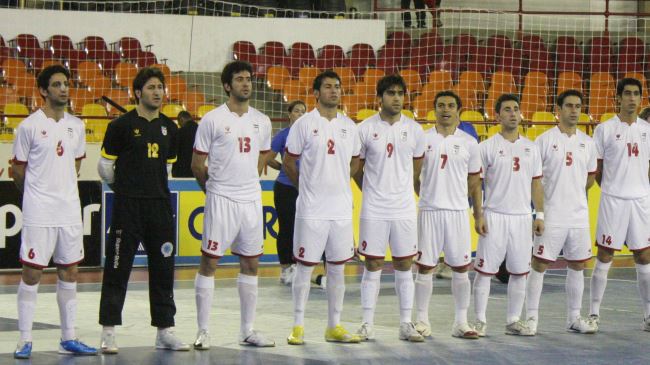
Iran’s futsal 7th in world, first in Asia

Iran’s futsal 7th in world, first in Asia

Was 2002; at that point the FA and rest of Great Britain had no interest in futsal.  More to the point the FA had said to me that futsal could not be played in England. Ridiculous I thought and I picked up  phone and made a call to FIFA. Best call I ever made, Victor Bicario, a fluent English speaking Spaniard was in charge of futsal, I was the call he had been waiting for, someone in England that wanted to play futsal. Remember at this point FIFA was playing futsal tournaments throughout the world with the originators of football missing. From that point on all FIFA emails regarding England futsal was copied in to me.  One email offered the Iranian national team to play in England two matches for a fee of, from memory £9k, of which FIFA would pay a large portion. I circulated the email to the limited number of teams and contacts I had at that time, outcome was that Tranmere Victoria, a team still playing today, managed to get sponsorship to take up the offer.

They took a hiding both nights they played, but was not disgraced, Iran was at a level, that until I watched that night, I did not know existed.  FIFA made sure the FA was invited and from that point futsal slowly has got to the point it is at today.

Iran’s national futsal team has been ranked seventh in the newest global ranking of the indoor sport.

In the latest ranking issued by a major futsal monitoring website, Iran has been ranked seventh with 1,588 points. The new ranking shows a four-point jump for the Iranian national futsal team compared to the previous ranking, the IRIB News reported.

Iran holds the first position in Asia ahead of Japan with 1,399 points and Thailand which has gained 1,295 points.

Spain tops the world ranking with 1,915 points followed by Brazil and Italy with 1,910 and 1,747 points, respectively.

Iranians have played in five editions of FIFA Futsal World Championship, reaching the semi-finals in their first appearance in 1992.

Known as the “Kings of Asian Futsal,” Iranian futsal players have won ten editions of Asian Futsal Championship.

Matty Payne match report on Franklin College success. Details next group matches.

21266Franklin arrived and immediately watched other Group ‘B’ opponents Middlesbrough Futsal Club and university of Nottingham. It was obvious that we were playing teams who train on a regular basis!

University of Nottingham train 3 times a week. They had routines for set pieces and defending. Nottingham won 3 1.

Franklin was on next against Leeds Futsal Club, another team who played FA National League futsal. We started off brightly, however got caught on break and went in 2 0 down at half time. Paul Goodhand gave us all a team talk and it seemed to work as immediately Sam brooks made it 2 1 and then 2 2. For rest of half we dominated and then made it 3 2. However with 12 seconds remaining Leeds equalised to finish game 3 3.

Second game was against University of Nottingham and we dominated game from start to finish with goals from Mat Payne (2) and Paul Goodhand to win 3 2.

The final game was against Middlesbrough, we knew a draw was enough to qualify; they have been in FA Northern Division One for years. We started brightly and Mathew Payne made it 1 0. We dominated first half but couldn’t add to the score. In second half Middlesborough upped the tempo and got the ball to their professional player more, it became 1-2 to them pretty quickly. However Franklin kept going and with 2 mins to go, Sam brooks made it 2 2. We then played out time knowing a draw was not enough for Middlesbrough!

Franklin now moves into final stage of groups match which has 24 teams remaining nationally split into 6 groups.

 Match report Matthew Payne

 Squad:

Andrew Ratchford; Gary Precious; Rob Cowie; Josh Tidswell; Sam Brooks; Pete Schoefield; Paul Goodhand; Matthew Payne.

Mini League 6

POS   P W D L GD PTS  
1 FC Salisbury United 0 0 0 0 0 0
2 Fourstar 0 0 0 0 0 0
3 Franklin College 0 0 0 0 0 0
4 University of Nottingham Futsal Club 0 0 0 0 0 0

Next fixtures

SUN 11 JAN 2015 13:04

FC Salisbury United vs. Franklin College @ Futsal UK Swindon