Author Archives: Kevin Bryant

Why are Brazil so good

j0434001brazil_ball_small.jpg According to ex-Brazil coach Carlos Alberto Parreira, no one is quite sure why so many wonderful players and great teams come from his beautiful country: "Sociologists and psychologists have tried to explain, but nobody can find one reason," he says. "The national football team is the symbol of national identity, the only time the nation gets together."Journalist Lito Cavalcanti suggests that the answer lies in the grinding poverty that afflicts so many young people in Brazil:"Many of Brazil’s greatest footballers grew up in favelas – the shanty towns in its sprawling cities. Here, life is hard and… there is no effective schooling. Drug dealers control their lives. Sport is the only way out and in Brazil, football is the only sport people care about.  
j0434001brazil_ball_small.jpg  "What makes them so good? Necessity. It’s the only life they have ahead of them. That is their drive."It may also be significant that there are no leagues or competitive matches for young children in Brazil."The children play a lot but it’s always very free," says Brazil 1994 World Cup winner Leonardo. "We don’t tell eight year olds you have to play right back."Parreira agrees: "We don’t put [young players] in a cage, say ‘you have to be like this’. We give them some freedom until they are ready to be coached."1It’s impossible to recreate the cultural importance given to football in the favelas and it’s difficult (although not impossible) for our children to play football without having their development slowed by playing in leagues run for the benefit of adults. But we can give our players more freedom. We don’t, for example, have to put players into positions at such an early age and risk taking can be positively encouraged. Players with good ball skills should be applauded for taking on the opposition, not instructed to pass the ball on pain of being labelled "selfish".  If we are to produce a home-grown Ronaldo, more emphasis also needs to be given to learning how to control the ball with all the surfaces of both feet, not just the inside of one foot. A lot of coaches forget that there are six surfaces children can use to control a ball – instep, heel, inside, outside, sole and toes – and that we have two feet. So let’s encourage our players to use them!There is another difference between our young players and most young Brazilian players. Young Brazilians don’t play six, seven or eight-a-side on park pitches because there aren’t many open spaces in the cities. So they commonly play a version of soccer – futebol – in a small hall – a salao – with a small, low-bounce ball: futebol de salao. "I played Futebol de Salão for many years and it helped me to become the player I am today. There you don’t have time to think, you are always tightly marked and you develop a sense for performing in small spaces." RobinhoTraining with a small, low bounce ball will discourage your players from kicking the ball aimlessly. It will also improve their ball control skills as it "sticks" to their feet instead of bouncing away.

Ball control exercises such as First Touch and Dribble Races can be enhanced by asking players to use all the surfaces of their feet when they’re moving a small, low bounce ball.

 Dribble RacesSet up: divide your players into teams of four or five. Mark the starting place for each team with a flat cone and place another flat cone – the turning cone – about 20 yards away. One futebol de salao ball per team. If you find it hard to get hold of a futebol de salao ball, you can use a size two football or a futsal but both have drawbacks. Futsals are too big and small footballs are too bouncy. How to play: the first player in each team dribbles the ball to the turning cone, turns, and passes back to the next player in line who repeats the run and pass. The winning team is the first team to complete the exercise. Progression: the first run will probably see players standing next to the turning cone as they pass and waiting by the starting cone for the ball to arrive. Some passes will be inaccurate and some will be struck too hard or too softly. Ask your players if they can think of a quicker way to complete the game. They should say (maybe with a bit of prompting) that passes must be of good quality and the player waiting to receive a pass should move towards the ball, not wait for it to arrive. Repeat the game and you should see a big improvement. Now make it a condition that player 1 should use their sole of their right foot to dribble, player 2 the inside of their left foot, player 3 the outside of their right foot etc. until they’ve used all six surfaces of both feet. Coaching note: you don’t have to cover all the possible combinations of foot/surface in one session! Work on two or three different combinations every week and your players will soon begin to play with a little Brazilian flair!References Andrew Benson and John Sinnott, Why are Brazil so good?, BBC SPORT,  [16 Jan 2011]FIFA/Coca Cola World Rankings

Play the Brazilian way

According to ex-Brazil coach Carlos Alberto Parreira, no one is quite sure why so many wonderful players and great teams come from his beautiful country: "Sociologists and psychologists have tried to explain, but nobody can find one reason," he says. "The national football team is the symbol of national identity, the only time the nation gets together."Journalist Lito Cavalcanti suggests that the answer lies in the grinding poverty that afflicts so many young people in Brazil:"Many of Brazil’s greatest footballers grew up in favelas – the shanty towns in its sprawling cities. Here, life is hard and… there is no effective schooling. Drug dealers control their lives. Sport is the only way out and in Brazil, football is the only sport people care about.
"What makes them so good? Necessity. It’s the only life they have ahead of them. That is their drive."It may also be significant that there are no leagues or competitive matches for young children in Brazil."The children play a lot but it’s always very free," says Brazil 1994 World Cup winner Leonardo. "We don’t tell eight year olds you have to play right back."Parreira agrees: "We don’t put [young players] in a cage, say ‘you have to be like this’. We give them some freedom until they are ready to be coached."1It’s impossible to recreate the cultural importance given to football in the favelas and it’s difficult (although not impossible) for our children to play football without having their development slowed by playing in leagues run for the benefit of adults. But we can give our players more freedom. We don’t, for example, have to put players into positions at such an early age and risk taking can be positively encouraged. Players with good ball skills should be applauded for taking on the opposition, not instructed to pass the ball on pain of being labelled "selfish".  If we are to produce a home-grown Ronaldo, more emphasis also needs to be given to learning how to control the ball with all the surfaces of both feet, not just the inside of one foot. A lot of coaches forget that there are six surfaces children can use to control a ball – instep, heel, inside, outside, sole and toes – and that we have two feet. So let’s encourage our players to use them!There is another difference between our young players and most young Brazilian players. Young Brazilians don’t play six, seven or eight-a-side on park pitches because there aren’t many open spaces in the cities. So they commonly play a version of soccer – futebol – in a small hall – a salao – with a small, low-bounce ball: futebol de salao. "I played Futebol de Salão for many years and it helped me to become the player I am today. There you don’t have time to think, you are always tightly marked and you develop a sense for performing in small spaces." RobinhoTraining with a small, low bounce ball will discourage your players from kicking the ball aimlessly. It will also improve their ball control skills as it "sticks" to their feet instead of bouncing away.

Ball control exercises such as First Touch and Dribble Races can be enhanced by asking players to use all the surfaces of their feet when they’re moving a small, low bounce ball.

 Dribble RacesSet up: divide your players into teams of four or five. Mark the starting place for each team with a flat cone and place another flat cone – the turning cone – about 20 yards away. One futebol de salao ball per team. If you find it hard to get hold of a futebol de salao ball, you can use a size two football or a futsal but both have drawbacks. Futsals are too big and small footballs are too bouncy. How to play: the first player in each team dribbles the ball to the turning cone, turns, and passes back to the next player in line who repeats the run and pass. The winning team is the first team to complete the exercise. Progression: the first run will probably see players standing next to the turning cone as they pass and waiting by the starting cone for the ball to arrive. Some passes will be inaccurate and some will be struck too hard or too softly. Ask your players if they can think of a quicker way to complete the game. They should say (maybe with a bit of prompting) that passes must be of good quality and the player waiting to receive a pass should move towards the ball, not wait for it to arrive. Repeat the game and you should see a big improvement. Now make it a condition that player 1 should use their sole of their right foot to dribble, player 2 the inside of their left foot, player 3 the outside of their right foot etc. until they’ve used all six surfaces of both feet. Coaching note: you don’t have to cover all the possible combinations of foot/surface in one session! Work on two or three different combinations every week and your players will soon begin to play with a little Brazilian flair!References Andrew Benson and John Sinnott, Why are Brazil so good?, BBC SPORT,  [16 Jan 2011]FIFA/Coca Cola World Rankings

A new direction for youth football in England

index2.jpg

 Many of you , like me, missed the recent television broadcast  interviewing Trevor Brooking about the future of youth football under the FA’s jurisdiction.

The following is the full transcript brilliantly written and presented by Dan Pope editor www.clubwebsite.co.uk.

It is a must read article. 

A new direction for youth football in England

The FA are introducing changes to youth footballDan Pope, Club Website editor

The winds of change are blowing through youth football in England and, as the good ship Football Development heads in a new direction, the FA are putting the kids at the helm.

Following repeated failures by the senior team at major championships and the inevitable calls for action that follow, the FA last month announced a Young Player Development Review, including 25 recommendations for English football that they hope will stop such calls happening ad infinitum.

The recommendations – currently undergoing a period of consultation before a potential sign-off in May – have implications for the game from top to bottom, but central to the proposals are changes to youth football at grassroots level.

The proposed changes aim give children more touches of the ball in small-sided games with age-appropriate pitch and goal sizes. The aim is for children to fall in love with the game whilst helping develop their technique before they make the step up to the ‘adult’ 11-a-side game.

The man behind the proposals is Nick Levett, the FA’s National Development Manager for Youth and Mini-soccer. He is currently touring county FAs and youth leagues across England to discuss the new proposals, but he kindly stopped off to tell Club Website what the changes are all about and what they will mean for our member clubs.

The FA’s proposals are outlined in sections below. Click the following links to jump straight to a section:

Overview – a child-centred approach

The proposals are centered around the people involved – the children who play the game. Nick Levett and his team have done a lot of research on the subject of child development from both within and outside of the game. He was able to quote from numerous research papers, the Sports Council and even the United Nations on the best way to approach child development, but the most important research was the FA’s own consultation with the game itself.Two youngsters playing the game

They spoke to over 300 youth clubs, hundreds of grassroots coaches, over 150 youth leagues and, arguably most importantly of all, 42 different groups of young footballers aged 8-12 from both professional and grassroots clubs.

All of this research has fed into the proposals, which aim to make football fun and enjoyable for kids, particularly at the youngest ages, to aid the development process and reduce the chances of kids dropping out of the game.

"It’s a child-centred approach," said Levett, "because adult values and child values are very different. If four kids had a ball to make up a game, they wouldn’t have subs and they wouldn’t stick themselves in a line and take it in turns; they’d just have a game."

The roadshow has been met with largely positive feedback, but Levett accepts that not all of the proposals will be to everyone’s liking. However, he strongly believes in the changes the FA are seeking to make to the game and is confident that, if the changes are signed-off after the period of consultation, by the time they are put into place for the 2013/14 season the FA can, with clubs and coaches, help to develop the game to meet the needs of the children.

New youth football formatsAn increase in small-sided football


The FA’s new youth football structure will see an increased use of small-sided gamesfor all age groups up to under 12s. This will allow children to progress gradually through age-appropriate formats, rather than jumping straight from mini-soccer to the ‘adult’ 11-a-side game before they even finish primary school.

The entry point for under 7s and under 8s will be the 5v5 game. Under 9s and under 10s will then step up to 7v7, followed by a new 9v9 level for under 11s and under 12s. Each step will feature appropriate pitch and goal sizes allowing kids to develop with the game, before they take the final step up to 11-a-side at under 13s level.

Playing smaller-sided games has been proved to give children an increased number of touches of the ball, while providing more goals and scoring attempts, more one-v-one encounters and more chance to attempt dribbling skills. It is this increased contact time with the ball that the FA believe will help children enjoy the game more while providing them with better preparation for the 11-a-side a game.

The FA’s Director of Football Development Sir Trevor Brooking has been a long-time advocate of such a change.

"Any skill I might have had as a player was almost there when I was 11 and I don’t see that in sufficient 11 year olds these days," he told Club Website in June 2008. "If your technical skills aren’t there when you start playing 11v11, you’re never going to cope with the game."

The introduction of 9 v 9

One of the biggest changes in the FA’s proposals is the introduction of 9-a-side football for under 11s and under 12s. The new format is designed to help bridge the gap between mini-soccer at under 10s and 11-a-side football at under 11s – a jump so big that this age group currently suffers from one of the biggest drop-rates in youth football in England.

It seems absurd to many in the game that children as young as 11 are expected to play on a full-size pitch and in full-size goals. And kids, being kids, are able to highlight this absurdity in brilliantly simple fashion. Here are a few of the comments that Levett heard from children in the under 11 age group while discussing the change to 11-a-side:

Possible ways to use an existing 11-a-side pitch to accommodate 9v9 pitches
“Why do I have to defend the same size goal as PetrCech?” – Josh

“Why is the pitch so much bigger than last year? We’re only a little bit bigger.” – DJ
“How am I expected to save shots in a goal that’s so big? When the adults come to 
take the nets down they use a step ladder!” Adam


The bare statistics back these views up. "The fastest-growing kid grows 2.5cm in the three or four months between leaving mini-soccer at under 10s and starting 11v11," says Levett. "In that time, we increase the size of the goal by 265% and the size of the pitch by 435%."

By introducing an intermediate-sized pitch, Levett hopes to remove the temptation to play a "territorial game" with the biggest kids at the back and the fastest kids up front.

The smaller pitch, he hopes, will encourage teams to play through the thirds, thus giving kids more touches of the ball and more chance to develop their skills while still moving towards an understanding of the full-size game.

The 9v9 game will be largely welcomed by the grassroots community according to a Club Website poll from May 2010, when 74% of our members said they favoured using 9v9 as a "stepping stone" from mini-soccer to the 11-a-side game.

Of course, there will be valid concerns over how teams can accommodate another format of football,when ground space for pitches is already at a premium. Aware of the issue around facilities, Levett says the FA’s solution is "not about losing 11v11 pitches; it’s about being more creative with how we use them."

The solution – already happening in 9v9 leagues around the country – is to use existing 11-a-side pitches and mark out 9v9 pitches in blue lines, with either one pitch from box to box or two pitches across half a pich (see diagram above).

Portable intermediate-sized (16′ x 7′) goalposts will also required, but the FA are currently working with the Football Foundation to make funding available for these as part of the Grow the Game scheme, while Sport England can provide 100% funding for 9v9 goalposts via the small grants scheme. 

Levett believes that the FA can learn lessons from the 110 leagues already playing 9v9 across England, thus helping them to implement the new format across the country. "Working locally I think we can find solutions to any problems," he says. "It is about us opening our minds and being creative doing that."

TrophiesRaising the age of "competitive" football


As part of the new proposals for youth football, the FA plans to scrap league tables for any children at primary school age (under 11s). 

Research that the FA carried out with 42 groups of 8-12 year old kids found consistently that winning league tables and trophies did not even register as a reason for kids wanting to play the game.

Conversely, they found that increased pressure from parents and coaches wanting their team to finish higher up the table put kids off playing and often led to kids dropping out of the game.

Once again, this comes back to structuring the game around the needs of the child rather than the adult.  "We need a child-centred focus," said Levett. "Not adult-driven around league tables and trophies. That’s the difference."

"We want kids to play the game so we have to make it as attractive as possible and if parent and coach pressure is one thing that’s forcing kids out of the game then we need to change that." 

This might set alarm bells ringing for parents and coaches who want to see childrens’ teams playing in a league structure. In fact a recent Club Website survey found that 63% of our members worried that removing league tables for under 11s risked making them less competitive. 

Levett understands these concerns and recognises there is a place for some competitive football – "there’s nothing wrong with under 7s playing for a cup three times a season" he says – but he is confident that kids will be naturally competitive enough without the adult-driven imposition of league tables.
Mourinho quote
“Kids want to win whatever they play. But their emphasis isn’t on winning so for us the emphasis shouldn’t be on winning. It should be about enjoyment, fun, learning the game, falling in love with it and getting better at it.”

As for league tables helping the development of young children, Levett refers to the model employed by Premier League and Football League clubs.

“In the professional game there are no leagues at all [for under 16s]. If it was good for development they’d put it in," he says.

"I’ve tried to balance the research where I can, but I can’t find any research that says drilling children into competitive leagues is good for development. All I can find is research that says it increases pressure which increases dropout."

Club Website footballFlexible formats & summer football

Research has demonstrated that children’s learning is helped by a variety of experiences. What works for one child might not work for another, while learning and practicing in different situations will help a child’s development.

With this in mind, the FA are seeking to be more flexible in the sort of football they can offer to children to help their development, away from employing the standard home and away structure throughout the season.

The FA have no plans to change the formal structure in this way, but are encouraging teams and leagues to think about creative ways to vary the football that kids play.

One suggestion is to split the season into thirds and play a different type of football in each. For example, an under 8s league could play the following types of football for a third of the season each:

  1. All teams come together to play at a single venue. Mixed teams, everyone plays, no subs, kids referee matches themselves. Ethos on fun, participation and learning the game
  2. Indoor football for six weeks during winter months with teams playing 4v4 / 5v5 matches
  3. Opposing teams have a joint training session delivered by home team followed by a match of 5v5


In line with this new flexibility, the FA are also considering a change to a summer season for youth football. In March, the Scottish Youth FA begins its first summer season as part of the National Player Pathway and a recent Club Website poll found that half of our members across the UK would welcome a similar change.

The FA have no immediate plans to impose such a change but Levett recognises that it’s a worthy topic of discussion.

"We played away at Portsmouth a few weeks ago and it was freezing," said Levett of the team he coaches at Fulham FC. "Kids were coming off the pitch saying ‘I can’t feel my feet’ and ‘I can’t feel the ball’. How’s that going to develop them? So if summer football is in the best interests of kids, then we’ve got to consider it."

The Relative Age Effect: Premier League Academy students (May 2009)
Age groups and the Relative Age Effect in football


The Relative Age Effect describes how people born later in their selection year – e.g. the youngest children in a school year group – are much less likely to go on to achieve high-level sporting performance.

This effect has been demonstrated in academic achievement and in numerous sports around the world. Football is one of them. In 2009, 57% of Premier League academy students had birthdays in September – December, 29% were born in January – April, while those born in May – August accounted for only 14% (see graph, left). 

So with a bias towards the older children in a group, how many potential stars of the future are being lost to the system at an early stage?


FA research has found the effect when looking at the grassroots game – i.e. teams finishing at the top of their league have a higher proportion of ‘older’ children than those finishing lower down – and so they are looking to de-couple youth football from the traditional academic year-groups and run it based around calendar years, as per the system already in place in Scotland and in most other countries around Europe.

Such a change would shift the bias in grassroots football towards the January – April group but, with school football still structured around the academic year, it would mean children born in May – August would no longer be the youngest inboth school football and grassroots football. Add to that some new some formal FA competition structures to benefit those children born in the summer months and the long-term relative age effect should be reduced.

For those parents and coaches worried that this might break up existing teams, don’t worry. If the proposals are accepted, the FA will introduce the calendar year system in 2013 for the new under 7s age group only, before phasing the system in gradually for each under 7s age group that follow.

Timetable for the introduction of new youth football formatsTimetable for proposed changes

All of the FA’s proposals detailed above are currently undergoing consultation. They will be put before the FA council next month and, if accepted, could be signed off in May.

If the proposals are accepted, the FA are keen to give clubs a decent lead-in period to prepare for the changes.

As a result, none of the changes outlined would become mandatory until the 2013/14 season, and they would be phased in for those age groups where a change in format is required (e.g. an under 12s team in 2013/14 would not be forced to switch to 9v9 for just one year, having played 11v11 at under 11s the season before). 

The 2012/13 season would be an optional season for leagues to make the change ahead of schedule if they choose to, while no changes will be introduced at all next season.

So there, in quite a large nutshell, are the proposals on the table for changes to the youth football setup in England over the years ahead.

The FA is keen to receive feedback during this period of consultation and we’d obviously love to know what you think so, if you have any comments or questions on any of the proposed changes, please click here and leave a comment.

We’ll then ensure that all of these are fed back to Nick Levett and his team on your behalf.

Dan Pope

Club Website editor

Click here to return to the Club House front page
Join the revolution! Visit clubwebsite.co.uk for all the latest news, updates & competitions from Club Website.

You can also follow us on Facebook and Twitter. Get involved!

Must read article – The Brazilian Way

j0434001brazil_ball_small.jpg

 More and more articles are arriving at my desk about how countries
develop junior players, none ever advocate or accompany proof that
junior leagues progressing from 7v7 to 11 v11 age 10 (as played in the
UK) is the way forward.

The following article on Brazilian youth will be no surprise to
futsal devotees, it might open awareness to other junior team managers.

Credit for the article must be passed to Steve Watson editor of www.footy4kids.co.uk

j0434001brazil_ball_small.jpg  

Play the Brazilian way

According
to ex-Brazil coach Carlos Alberto Parreira, no one is quite sure why so many
wonderful players and great teams come from his beautiful country:

"Sociologists
and psychologists have tried to explain, but nobody can find one reason,"
he says. "The national football team is the symbol of national identity,
the only time the nation gets together."

Journalist
Lito Cavalcanti suggests that the answer lies in the grinding poverty that
afflicts so many young people in Brazil:

"Many
of Brazil’s greatest footballers grew up in favelas – the shanty towns in its
sprawling cities. Here, life is hard and… there is no effective schooling.
Drug dealers control their lives. Sport is the only way out and in Brazil,
football is the only sport people care about.
"What makes them so good? Necessity. It’s the only life they
have ahead of them. That is their drive."

It may
also be significant that there are no leagues or competitive matches for young
children in Brazil.

"The
children play a lot but it’s always very free," says
Brazil 1994 World Cup winner Leonardo. "We don’t tell eight year olds
you have to play right back."

Parreira
agrees:

"We don’t
put [young players] in a cage, say ‘you have to be like this’. We give them
some freedom until they are ready to be coached."1

It’s
impossible to recreate the cultural importance given to football in the favelas
and it’s difficult (although not impossible) for our children to play football
without having their development slowed by playing in leagues run for the
benefit of adults. 

But we
can give our players more freedom. We don’t, for example, have to put players
into positions at such an early age and risk taking can be positively
encouraged. Players with good ball skills should be applauded for taking on the
opposition, not instructed to pass the ball on pain of being labelled
"selfish". 

If we are
to produce a home-grown Ronaldo, more emphasis also needs to be given to
learning how to control the ball with all the surfaces of both feet, not just
the inside of one foot. A lot of coaches forget that there are six surfaces
children can use to control a ball – instep, heel, inside, outside, sole and toes
– and that we have two feet. So let’s encourage our players to use them!

There is
another difference between our young players and most young Brazilian players.
Young Brazilians don’t play six, seven or eight-a-side on park pitches because
there aren’t many open spaces in the cities. So they commonly play a version of
soccer – futebol – in a small hall – a salao – with a small, low-bounce ball:
futebol de salao.

"I played Futebol de Salão for many years and it helped me to
become the player I am today. There you don’t have time to think, you are
always tightly marked and you develop a sense for performing in small
spaces." Robinho

Training
with a small, low bounce ball will discourage your players from kicking the
ball aimlessly. It will also improve their ball control skills as it
"sticks" to their feet instead of bouncing away.

Ball
control exercises such as First
Touch
and Dribble Races can be enhanced by asking players to use all the
surfaces of their feet when they’re moving a small, low bounce ball.

Dribble Races

Set up: divide
your players into teams of four or five. Mark the starting place for each team
with a flat cone and place another flat cone – the turning cone – about 20
yards away. One futebol de salao ball per team.

If you
find it hard to get hold of a futebol de salao ball, you can use a size two
football or a futsal but both have drawbacks. Futsals are too big and small
footballs are too bouncy.

How to
play: the first player in each team dribbles the ball to the turning
cone, turns, and passes back to the next player in line who repeats the run and
pass.

The
winning team is the first team to complete the exercise.

Progression: the
first run will probably see players standing next to the turning cone as they
pass and waiting by the starting cone for the ball to arrive. Some passes will
be inaccurate and some will be struck too hard or too softly.

Ask your
players if they can think of a quicker way to complete the game.

They
should say (maybe with a bit of prompting) that passes must be of good quality
and the player waiting to receive a pass should move towards the ball, not wait
for it to arrive.

Repeat the
game and you should see a big improvement.

Now make
it a condition that player 1 should use their sole of their right foot to
dribble, player 2 the inside of their left foot, player 3 the outside of their
right foot etc. until they’ve used all six surfaces of both feet.

Coaching
note: you don’t have to cover all the possible combinations of
foot/surface in one session! Work on two or three different combinations every
week and your players will soon begin to play with a little Brazilian flair!

References

Andrew
Benson and John Sinnott, Why
are Brazil so good?
, BBC SPORT,  [16 Jan 2011]

FIFA/Coca
Cola World Rankings


How would
you like a session dedicated to improving individual skills on the ball?

This
week’s Smart Sessions
Core Skills
, is a perfect compliment to playing the
Brazilian way. It is titled "Fancy feet" and focuses on teaching
skills on the ball.

Junior teams take note – Letter from LFA

new_umbro_futsal_league.jpg Junior teams please take note.  As recognition of our work with junior football the LFA nominations for the next stage of the FA Junior Futsal Cup will be nominations from the Grimsby Institute Junior Futsal League.  The teams will play in a three county qualifying tournament, the winners of that entering the Final stages of the FA Junior Futsal Cup 2011.


Hi Kevin,


I have been given
a message to contact you regarding the FUTSAL qualifying events in our County.


I was awaiting
confirmation of the Regional Format before discussing this further with you,
however I now have all that confirmation and am happy for you to utilise your
current league/Futsal competition provision to be a qualifying process for the
County FA’s nomination to the regional youth Futsal Cup Event. 


An adult FUTSAL
competition will take place in Lincoln to qualify a County Men’s Team and
County Women’s Team to the Regional Event (information and promotion of this
event will be circulated shortly).


I am currently
out the office today but will return your call personally on Monday to discuss
the next stages and discuss this further with you.


Thanks,

Linzi
Hewitt | Football Development Officer (Women and
Girl’s)

Lincolnshire
Football Association LTD (Registered in England & Wales)

Company
Registration Number 3762658

Deepdale Enterprise Park | Deepdale
Lane | Nettleham | LN2 2LL

Tel:
0844 9670708 | Mob: 07535402903

Web: www.lincolnshirefa.com/development

New Course Dates


FA Goalkeeping Level 1 – 19th, 20th March and 2nd April 2011 at
Bradley Playing Fields, Grimsby

Cost: £130.00 FA Charter Standard, £150.00 Full Price


Coaching Disabled Footballers – 12th March 2011 at Cherry
Willingham Community School, Lincoln

Cost: £40.00 FA Charter Standard, £50.00 Full Price


For more details and application form please visit please visit http://www.lincolnshirefacom/development/coacheducation
and click on the required course.

Referees Notebook

 GFL


The following article is the text of a forthcoming Referees Column for the Grimsby Telegraph.


Author Dave Young has written the column for many years, a brilliant read if you have missed it, always current, and because Dave is a highly qualified referee/assessor, always accurate.  Don’t miss reading it.


This week we take a look at an aspect of
the game that has really taken off across the world in the last few years but
an aspect that never seems to get the recognition it deserves. In that respect
I’m as guilty as anybody but with Grimsby having in Gavin Sartain it’s first
FIFA Official we should not only be congratulating him on such a massive
achievement but we should also mention Kevin Bryant who has been at the
forefront of the game at a local and national level.

I asked Gavin to give some background on
futsal as  another avenue for qualified
Referees to take and one which has opened so many doors for one of our most
accomplished Referees.

GFL  

What Is Futsal

Futsal is FIFA’s variant of association football that is
played on a smaller playing surface and mainly played indoors. Its name is
derived from the Thai futebol de salão and the Spanish fútbol de
salón (colloquially fútbol sala), which can be translated as
"hall football" or "indoor football". During the sport’s
second world championships held in Madrid
in 1985, the name fútbol de salón was used. Since then, all other names
have been officially and internationally changed to Futsal.

Futsal is played between two teams each with five players, one of
whom is the goalkeeper. Unlimited substitutes per team are permitted. Unlike
some other forms of indoor football, the game is played on a hard court surface
delimited by lines. Walls or boards are not used. Futsal is also played with a
smaller ball with less bounce than a regular football. The rules create an
emphasis on improvisation, creativity and technique as well as ball control and
passing in small spaces.

Today, more than 100
countries participate in FIFA/ FIFA Confederations Futsal Competitions. There
has also been the growth of Strong Professional Futsal Leagues in the likes of Spain, Brazil
and Russia.
Millions too are practicing Futsal. According to the Italian Olympic Committee
(CONI) research, more than 4.000.000 Italians regularly practice Futsal twice a
week.

11 a side football will always be the overwhelming concern of the
FA but the FA is also aware that football participation is changing. Recent
years have seen a significant growth in the numbers of people playing Small
Sided football. The popularity of Small Sided Football is a reaction to
changing work/leisure patterns and a move towards ‘Pay and Play’ football. It
is here to stay! The FA views Futsal as a high quality format of a small sided
game.

• Participation
– Many Countries that we admire for the technical skills of
their players use Futsal as an aspect of youth development. Ball retention,
quick and skillful play, tactical awareness – all are promoted in Futsal.

• Fairplay – The Laws of the game and an accumulated fouls
rule discourages teams from being overly physical or disputing the decisions of
the two referees.

• Exit routes – Futsal can offer some very exciting
opportunities to its participants that are not available in traditional five a
side. There are now County
FA endorsed leagues,
university regional leagues, an FA Futsal Cup, FA National Leagues, UEFA
Futsal Cup and International representation in European and World Competitions
available to talented teams and players.

The refereeing of Futsal is a little different than 11
v11. The game has two referees who operate on each side of the field
of play and work together to control the game. A third referee who
controls the technical areas and administration. The 4th official is
a timekeeper. In local and regional leagues, it is usual for 2
referees to control the whole game and produce match records and keep control
of the time themselves.  

The game has also gone professional in Spain,
Portugal, Brazil and Russia,
with many European countries following their lead (Belgium, Cyprus,
the Netherlands and Italy. Games in
Russia
have team travelling 5000 mile round trip to play their games. That in
itself shows how committed they are to their Futsal.

The future is bright for Futsal within this country and with the
popularity continuing to grow; the game will only benefit football by
helping the development and progression of future players, coaches and referees
alike. For an opportunity to get involved with Futsal in
Grimsby, Contact Kevin Bryant on kevin@futsal.org.uk or visit the Grimsby Futsal League
Website, www.grimsby.yourfutsal.org.
FIFA Futsal laws of the game are available to view on www.FIFA.com.

Thanks to Gavin for introducing us to Futsal. What is clear is
that there are aspects of the laws which can’t far from the minds of the 11 side
law makers when they are looking to improve the game generally. Watch this
space.


Grimsby League futsal players off to Wembley?

 GFL

Mark Huntly, captain of of the GFL’s most successful team Magpies, they played a record sequence of 44 games without defeat, has manged through a decorator contact to get an entry into the Johnston Paints five aside tournament.

There are two qualifying rounds, the North in Manchester next Sunday & the South in Milton Keynes.  Both qualifying rounds allow for a 60 team entry. 

The two winning teams will play the final at the Johnstone Paints Cup Final at Wembley.

Can they do it?  Mark has trawled the GFL for all our best futsal players, some of which have experienced winning big tournaments in the past, so they know what needs to be done. 

GFL – James Bryant interview

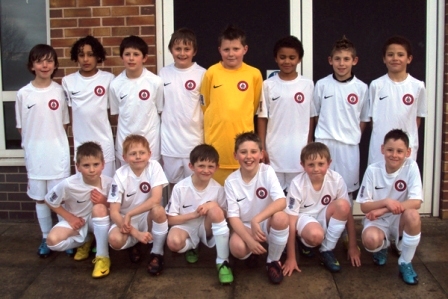
gscu10coltsteamapril2010websitepicture_reduced_web_size.jpg

I have fully enjoyed the league , although soon it will be the end of it. My team and I are so close to winning the league for a third time. 

Our team has worked hard at training futsal and playing futsal in the league.

I am very confident we can win the league from all the futsal we have had.

As we are good at futsal we would recommend it to other teams to have a go.

The best bits of futsal, are having a game and having some fun.


Question to James – what do you like most about futsal?

Reply – quick, skillful and I get quite a lot of touches on the ball.

What do you least like about futsal? – kick-ins

 Grimsby Soccer Club Colts under 11’s

The Colts split into GSC Elite & Little Devils in the Junior Futsal League